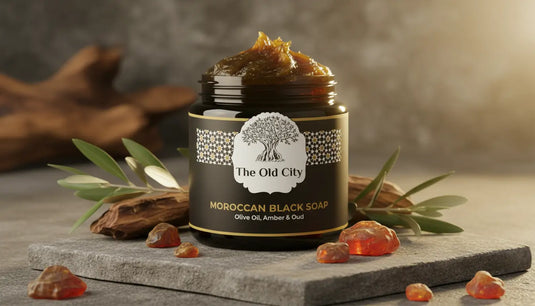
If you’ve ever been to a traditional Moroccan hammam, you’ve met beldi soap — even if no one told you its name. It’s the soft, dark, almost gel-like paste the attendant scoops out and massages over your skin before the real scrubbing begins. It looks nothing like a normal bar of soap, and it doesn’t behave like one either. Here’s what Moroccan black soap actually is, why it’s central to the hammam, and how to use it at home.
So what is beldi soap?
Moroccan black soap — savon noir or beldi — is a soft, dark paste made from olives. Traditionally, crushed olives and olive oil are blended with an alkali into a thick, spreadable soap rather than a hard bar. The colour ranges from deep brown to near-black, and the texture is closer to a soft butter than a solid block.
It’s been a staple of the North African bathing ritual for generations, valued above all for one thing: it prepares the skin to be exfoliated. Our own version keeps that olive-oil base and adds laurel and pine for a clean, woody, herbal character.
What makes it different from ordinary soap
Three things set beldi apart from the bar in your shower:
- It’s a paste, not a bar. You scoop it, you don’t lather it.
- It barely foams. Beldi isn’t about bubbles — it’s about softening the skin so dead cells lift away during scrubbing.
- It’s used with a tool. The magic happens when you pair it with a kessa, a coarse exfoliating mitt.
How to use Moroccan black soap, step by step
- Warm your skin. Beldi works best on warm, damp skin. A few minutes in a hot shower or steamy bathroom opens things up — this is what the hammam’s steam room is really for.
- Apply a thin layer. Scoop a small amount and massage it over damp skin. A little goes a long way.
- Let it sit for 3–5 minutes. Don’t rinse straight away — give the olive oil time to soften the surface of the skin.
- Scrub with a kessa mitt. Work in circular motions and you’ll see dead skin lift away — the part everyone talks about.
- Rinse well with warm water, and finish with a light oil or moisturiser while your skin is still damp.
Once a week is plenty for most people. For the full ritual from start to finish, see our guide to doing a hammam at home.
What to expect (the honest version)
- It doesn’t lather. If you’re expecting suds, you’ll be surprised — that’s by design.
- The scent is earthy and herbal. Our laurel-and-pine blend leans clean and woody rather than sweet or perfumed.
- The exfoliation comes from the scrub, not the soap. Beldi softens; the kessa does the lifting. Skip the mitt and you’ll miss most of the benefit.
- Go gently. Once a week is enough — over-scrubbing isn’t better, and sensitive areas need a lighter touch.
Beldi vs African black soap
People often mix these two up, but they’re quite different soaps from different traditions. Moroccan beldi is an olive-based paste used to prep skin for scrubbing; African black soap is usually a bar made from plant ashes and used as an everyday cleanser. We compare them properly in this guide.
Why we make ours the way we do
Beldi is one of those products where shortcuts show. We keep ours olive-oil based and add laurel and pine for character — no synthetic detergents, no unnecessary additives. It’s a simple paste that does one job beautifully: getting your skin ready to feel its smoothest.
You’ll find our Moroccan black soap and hammam essentials in the hammam & exfoliation collection.