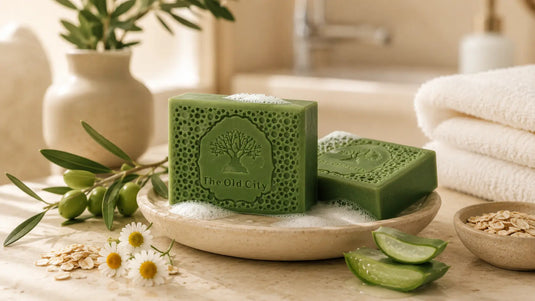
If your skin reacts to almost everything, choosing a soap can feel like a gamble. The good news: a lot of sensitive-skin trouble comes down to a handful of harsh ingredients that traditional natural soaps simply don’t contain. Here’s what to look for, what to avoid, and which natural soaps tend to suit sensitive skin best.
Why ordinary soap bothers sensitive skin
Most supermarket bars and shower gels are built around synthetic detergents and fragrance. They foam beautifully, but that big lather often comes from sulphates (like SLS) that can strip the skin’s natural oils, while synthetic fragrance is one of the most common triggers for irritation. If your skin feels tight, itchy or dry after washing, the soap is a good place to look first.
What to look for in a sensitive-skin soap
- A short ingredient list. Fewer ingredients means fewer potential triggers. The best natural soaps have just a handful.
- An oil-based, “true soap” base. Soaps made from olive oil and similar plant oils are gentler than detergent bars.
- No synthetic fragrance. Unscented or naturally scented bars are far less likely to irritate.
- No SLS/SLES or harsh foaming agents. A softer, creamier lather is usually a good sign.
The natural soaps that tend to suit sensitive skin
- Aleppo soap. Made from just olive oil and laurel oil, with no synthetic fragrance or detergents, it’s long been a favourite for sensitive skin. A lower-laurel bar is the gentlest place to start — we explain why in this guide to Aleppo soap for sensitive skin.
- Pure olive oil soap. About as simple and mild as soap gets. More on its benefits here.
- Lightly scented natural bars. If you want a little fragrance, choose bars scented simply and naturally rather than with synthetic perfume.
A few honest pointers
- Patch test first. Even with a gentle, natural bar, try it on a small area for a day or two before going all-in — everyone’s skin is different.
- Start unscented or low-scent. You can always add more fragrance to your routine later; it’s harder to undo irritation.
- Moisturise while damp. Whatever soap you use, sealing in moisture straight after washing makes a big difference for sensitive skin.
- Natural doesn’t mean “works for everyone.” If something irritates your skin, stop using it. If you have a diagnosed skin condition, it’s always worth checking with a professional.
Where to start
For most people with sensitive skin, a simple olive-and-laurel Aleppo soap is a brilliant first step — short ingredient list, no synthetic fragrance, and gentle by nature. Browse our full range of natural soaps to find the right fit.